Delhi NCR's warehousing and logistics belt — spread across Noida, Greater Noida, Ghaziabad, Gurugram and Faridabad — has grown faster than most of its buildings' fire strategies have been reviewed. A racking layout, a sprinkler design and a detection scheme are all sized against a specific commodity and storage height at the time they were installed. When the operation changes and the fire strategy does not, the gap is invisible until it is tested by an actual fire.
This is a walk-through checklist for auditing that gap. It complements our broader guide to warehouse and cold storage fire safety — that article covers system design in depth; this one is the practical list to work through on a site visit.
Before you walk the floor: paperwork check
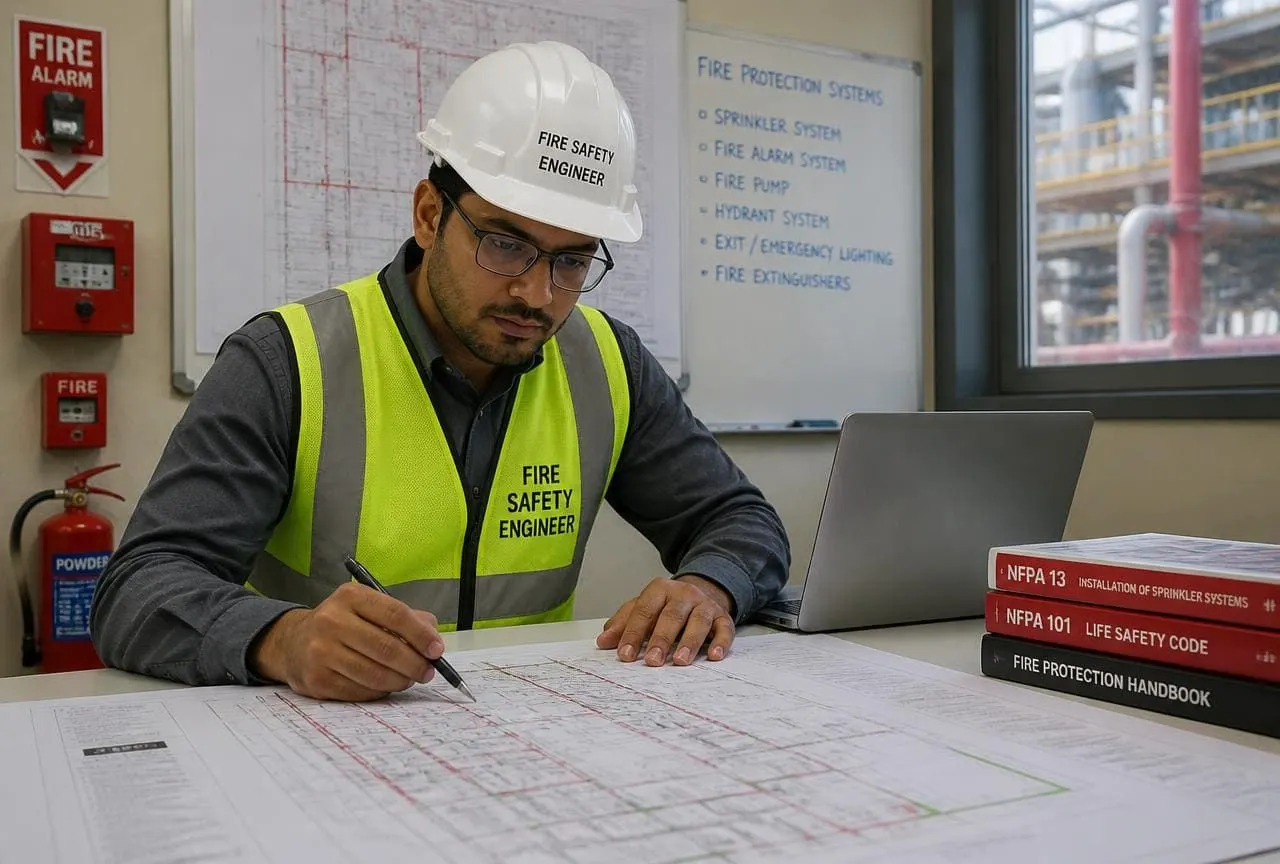
- Sprinkler design basis — the commodity classification, storage height and clearance the system was designed for, and whether it still matches what is stored today
- Fire NOC and any conditions attached to it
- Test and commissioning records for the hydrant, sprinkler and detection systems
- AMC records and the most recent pump automatic-start test log
- As-built drawings — do they reflect racking as it actually stands, or as it stood at handover
Racking, storage and flue spaces
- Storage height against the design height stamped in the sprinkler calculation — has racking been raised by even one tier since installation?
- Clearance between the top of stock and the sprinkler deflectors — mark the maximum permitted stacking height physically on the rack uprights if it is not already marked
- Transverse and longitudinal flue spaces kept clear, not used for overflow stock
- Aisle widths maintained for both fire access and sprinkler coverage
- Commodity check — has the stored goods classification changed (for example, from metal parts to cartoned plastics) since the system was designed?
Detection and suppression
| Item | What to check on the walk-through |
|---|---|
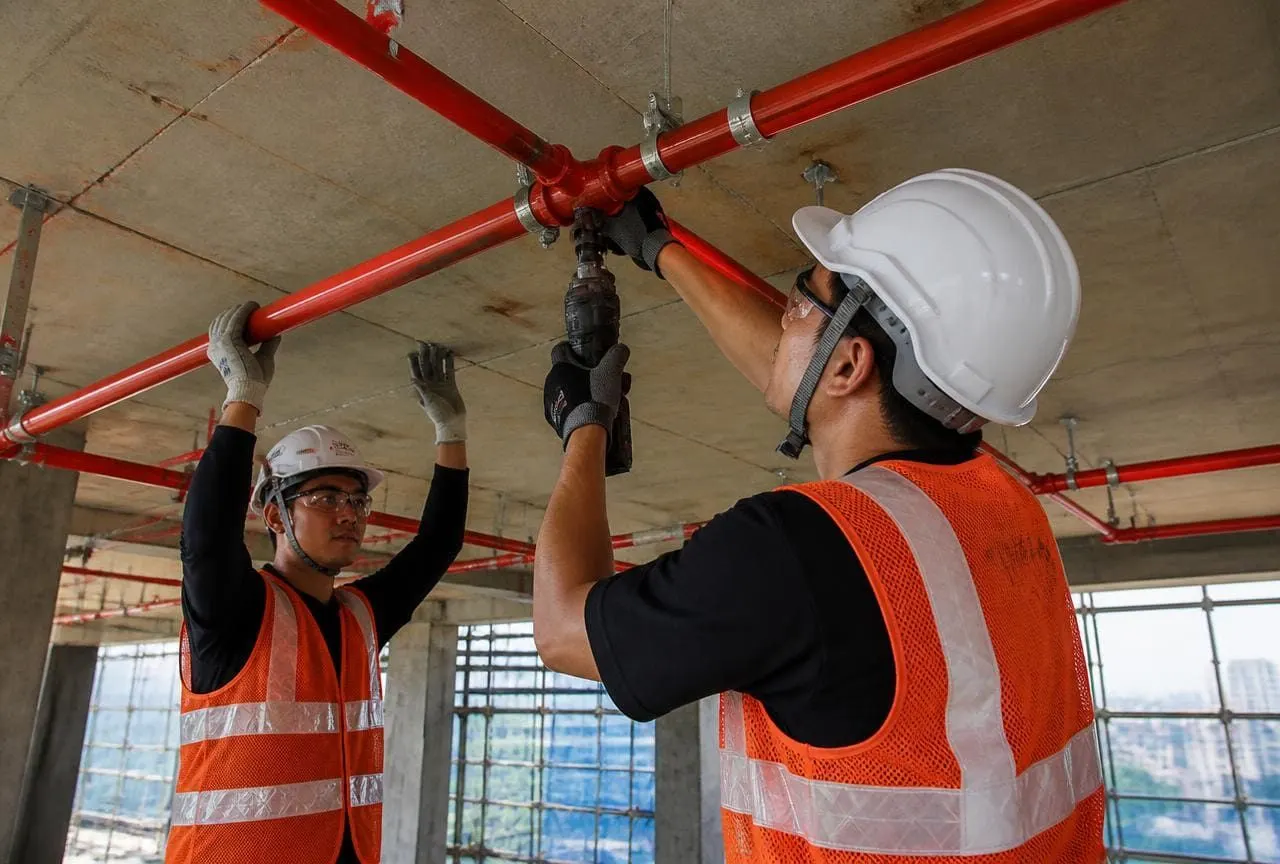
| Sprinkler heads | Not painted over, not obstructed by lighting, ducting or the top pallet layer; correct type for the area (standard vs ESFR/large-drop) |
| Detection | Type suited to roof height — aspirating or beam detection in high-bay areas rather than relying on standard point detectors alone |
| Fire pump room | Jockey pump not short-cycling, diesel standby starts and runs on test, fuel and battery condition current |
| Water reserve | Fire tank level correct and not shared with an unprotected domestic draw-off |
| Valves | All isolation valves in the open position and secured — the single most common cause of a zero-pressure flow test |
Hydrants, hose reels and extinguishers
- Yard hydrant ring main accessible — not blocked by parked trailers, container storage or locked gates meant for fire appliance access
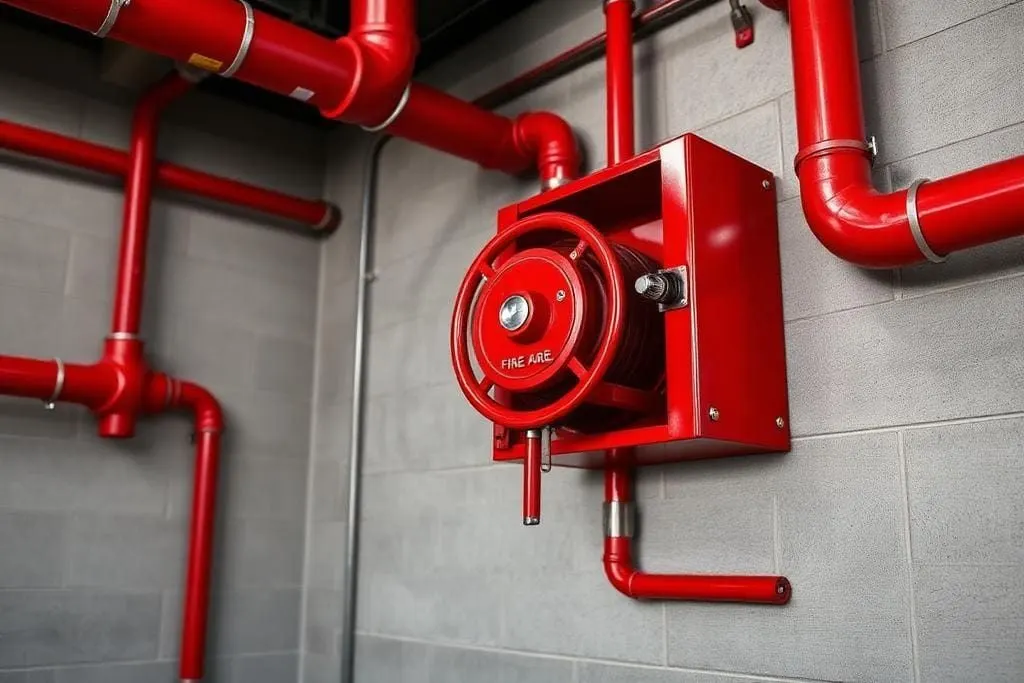
- Landing valves and hose reels unobstructed, hoses present and undamaged
- Extinguisher type matched to the hazard at each location — CO2 or clean agent at electrical panels and battery charging bays, not water-based units
- Battery charging bay location — separated from racking, with its own detection and appropriate extinguisher provision
Escape, access and housekeeping
- Escape routes and fire exits clear of pallets, machinery and temporary storage
- Fire appliance access roads and turning circles usable, not repurposed for container or vehicle storage
- Waste packaging — cartons, shrink wrap, broken pallets — controlled and not accumulating against walls or racking
- Hot work (welding, grinding) covered by a permit system, not carried out casually near storage
- Hydrant cabinets, call points and extinguishers visible and unobstructed
Turning the walk-through into an audit report
A checklist only has value once it is converted into a prioritised, dated action list — what was found, what it means, and by when it needs fixing. Findings that indicate the fire strategy no longer matches the building's actual use (a raised rack, a changed commodity, a repurposed charging bay) should be flagged separately from routine maintenance items, because they need an engineering review rather than a work order.
For facilities across the NCR logistics belt — Noida, Greater Noida, Ghaziabad, Gurugram and Faridabad — we run this as a formal Fire Safety Audit, with AMC Services available to close the maintenance gaps it finds.